Mixed Reality: The Future of Digital Interaction and Real-World Experiences
Introduction to Mixed Reality
Technology continues to change the way people live, work, learn, and communicate. From smartphones to virtual assistants, digital innovations have become an important part of everyday life. One of the most exciting developments in this field is Mixed Reality (MR), a technology that combines the physical world with digital elements to create interactive experiences. It allows users to see and interact with virtual objects while remaining connected to their real surroundings.
Mixed Reality is becoming increasingly popular in industries such as education, healthcare, manufacturing, gaming, and architecture. Unlike traditional digital experiences, it allows virtual content to respond to the physical environment. For example, a student can explore a three-dimensional model of the human heart in a classroom, while an engineer can examine a virtual machine placed directly within a real workspace.
As technology continues to advance, Mixed Reality has the potential to transform how people understand information, solve problems, and interact with the world around them.
What Is Mixed Reality?
Mixed Reality is a technology that blends physical environments with computer-generated objects, images, sounds, and other digital information. These virtual elements are designed to interact with the real world rather than simply appear on a screen.
For example, imagine wearing a headset that displays a virtual television on your living room wall. You can move around the room, view the television from different angles, and interact with digital controls while still seeing your furniture and other surroundings. This is a simple example of how Mixed Reality can work.
The technology uses cameras, sensors, spatial mapping, and advanced software to understand the environment around the user. It can identify surfaces, estimate distances, and position virtual objects in appropriate locations. Some systems also support hand tracking, eye tracking, and voice commands, making interactions more natural.
Mixed Reality is different from simply watching a video or viewing a digital image. It creates an experience in which physical surroundings and digital content can work together.
Understanding the Difference Between AR, VR, and MR
To understand Mixed Reality, it is helpful to compare it with Augmented Reality (AR) and Virtual Reality (VR).
Augmented Reality adds digital information to a view of the real world. For instance, a smartphone application might display directions over a live camera view of a street. The physical environment remains visible, but digital elements are added to it.
Virtual Reality creates a completely computer-generated environment. Users usually wear a VR headset that blocks most or all of their physical surroundings. They can then explore virtual locations, play immersive games, or participate in simulated activities.
Mixed Reality combines aspects of both approaches. It connects digital objects with the physical environment and can allow users to interact with those objects in ways that reflect their surroundings.
Although these technologies are related, their capabilities depend on the particular hardware and software being used. Some modern devices offer features that overlap across AR, VR, and MR, so the boundaries are not always absolute.
How Does Mixed Reality Work?
Mixed Reality depends on several technologies working together. These systems help digital content appear in the correct location and respond to the user’s movements.
First, cameras and sensors collect information about the surrounding environment. This information helps the device recognize walls, floors, furniture, and other physical objects.
Second, spatial mapping creates a digital understanding of the user’s surroundings. The system uses this information to determine where virtual objects should appear and how they relate to real surfaces.
Third, computer vision and tracking technologies help the device understand movement. When a user turns their head, walks across a room, or changes their viewing angle, the digital content can adjust accordingly.
Finally, interactive software allows users to control virtual objects through gestures, controllers, eye movements, or voice commands, depending on the device.
These processes work together to create a more natural experience. However, performance can vary depending on the quality of the sensors, computing power, lighting conditions, and the complexity of the environment.
Major Applications of Mixed Reality
1. Mixed Reality in Education
Education is one of the most promising areas for Mixed Reality. Traditional teaching methods often rely on textbooks, photographs, and classroom explanations. While these methods remain valuable, some concepts can be difficult to understand without visual demonstrations.
Mixed Reality can make learning more interactive by allowing students to explore three-dimensional objects and simulated environments. For example, biology students can examine the structure of a human cell, while astronomy students can explore models of planets and their movements.
Teachers can also use immersive demonstrations to explain scientific experiments and historical events. Students may find it easier to understand complicated ideas when they can observe and interact with visual representations.
Mixed Reality can support practical learning, but it works best when combined with good teaching methods rather than replacing teachers or traditional educational resources.
2. Mixed Reality in Healthcare
Healthcare professionals need accurate information, practical training, and effective ways to explain medical conditions. Mixed Reality can support these needs by providing interactive visual tools.
Medical students can study three-dimensional anatomical models and practice certain procedures in simulated environments. Surgeons may use specialized systems to view relevant digital information during planning or selected clinical procedures.
The technology can also help doctors explain diagnoses to patients. Instead of relying entirely on verbal descriptions, a doctor may show a visual model of an organ or demonstrate how a particular condition affects the body.
Mixed Reality can also support rehabilitation exercises and certain therapeutic activities. However, medical applications require careful testing, patient privacy protections, and appropriate professional oversight. The technology is a support tool, not a replacement for qualified healthcare professionals.
3. Mixed Reality in Manufacturing and Engineering
Manufacturing companies often deal with complex equipment, detailed designs, and demanding maintenance procedures. Mixed Reality can help workers understand these tasks by displaying digital instructions alongside real machinery.
For example, a technician repairing an industrial machine could view step-by-step guidance without constantly checking a separate manual. Engineers may also inspect three-dimensional product designs in a real workspace before manufacturing begins.
This approach can help teams identify design problems, improve communication, and reduce misunderstandings. Remote experts may also guide on-site workers by sharing visual information, depending on the capabilities of the system.
When properly implemented, Mixed Reality can make certain industrial processes easier to understand and support more efficient collaboration between technical teams.
4. Mixed Reality in Gaming and Entertainment
Gaming is another field where Mixed Reality offers exciting possibilities. Instead of limiting gameplay to a television or computer monitor, MR experiences can incorporate the player’s physical surroundings.
A virtual character might appear to stand on a real table, while a digital obstacle could seem to occupy part of a room. Players can move around these objects and interact with them through supported controls.
Entertainment companies can also use Mixed Reality for interactive storytelling, immersive exhibitions, and creative performances. Museums, for example, may present digital reconstructions that help visitors understand how historical objects were originally used.
These experiences can make entertainment more engaging by combining imagination with familiar surroundings.
5. Mixed Reality in Architecture and Real Estate
Architects and property developers can use Mixed Reality to present designs before construction is complete. Instead of looking only at drawings or computer screens, clients can view digital building models within physical spaces.
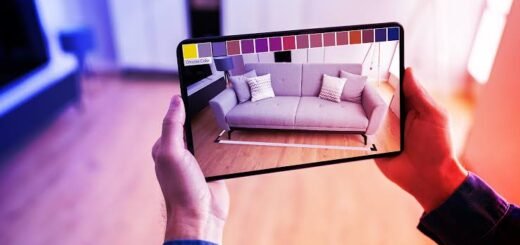
A homeowner might examine how a proposed kitchen design fits into an existing room. Architects can evaluate layouts, visualize furniture placement, and discuss design changes with clients.
Real estate professionals may also use immersive presentations to help buyers understand proposed developments or interior renovations.
By making designs easier to visualize, Mixed Reality can improve communication between designers, contractors, and customers. Nevertheless, digital models must remain accurate if they are to support meaningful decisions.
Benefits of Mixed Reality
Mixed Reality offers several potential advantages across different industries.
One major benefit is improved visualization. Complex information can become easier to understand when people can explore it in three dimensions rather than relying only on written descriptions.
Another advantage is interactive learning. Users can engage directly with digital objects, which may help them develop a better understanding of unfamiliar concepts.
Mixed Reality can also support collaboration. Teams working in different locations may share digital models, discuss designs, and exchange information through compatible systems.
In professional environments, it can provide access to contextual instructions and simulations. This may help workers learn procedures, understand equipment, and prepare for certain tasks.
The technology also encourages creativity by giving designers, developers, educators, and artists new ways to present information and create experiences.
However, these benefits are not automatic. Results depend on the quality of the application, the needs of the users, the available infrastructure, and how well the technology is integrated into existing workflows.
Challenges and Limitations of Mixed Reality
Despite its potential, Mixed Reality still faces several challenges.
The first is cost. Advanced headsets and supporting equipment can be expensive, making widespread adoption difficult for schools, small businesses, and individuals with limited budgets.
Another challenge is technical complexity. Developing high-quality MR applications requires specialized knowledge, suitable software, and careful testing. Devices may also have limitations involving battery life, field of view, processing power, and comfort.
Privacy is another important concern. Some Mixed Reality systems use cameras, microphones, eye tracking, or spatial mapping. If this information is collected or stored improperly, it could create risks for users and people nearby.
There are also accessibility concerns. Certain users may experience discomfort, visual fatigue, or difficulty using gesture-based controls. Applications therefore need thoughtful design, suitable alternatives, and clear safety guidance.
Finally, organizations must consider whether Mixed Reality actually improves a task. In some situations, a conventional computer, printed guide, or smartphone may be more practical and affordable.
The Future of Mixed Reality
The future of Mixed Reality will likely be shaped by improvements in hardware, software, artificial intelligence, and connectivity. As devices become more comfortable and capable, they may become useful in a wider range of everyday situations.
Artificial intelligence could make MR systems more responsive by helping them recognize objects, understand spoken requests, and provide relevant information. For example, a worker might ask for instructions while inspecting a piece of equipment, or a student might request additional information about a virtual model.
Improvements in spatial computing could also make digital interactions feel more natural. Better tracking and more realistic graphics may help virtual objects remain stable and appear more closely connected to the physical environment.
Businesses may increasingly explore Mixed Reality for training, remote assistance, product design, and collaboration. Educational institutions may also experiment with immersive lessons when suitable equipment and teaching resources are available.
Still, widespread adoption will depend on affordability, reliability, privacy, and genuine usefulness. Mixed Reality is unlikely to replace every traditional tool, but it may become an important option wherever physical context and digital information need to work together.
Conclusion
Mixed Reality represents an important step in the development of interactive technology. By combining digital content with physical surroundings, it creates new opportunities for learning, communication, design, entertainment, and professional work.
Its applications in education, healthcare, manufacturing, gaming, and architecture demonstrate how it can help people visualize information and interact with complex ideas in practical ways. At the same time, challenges involving cost, privacy, accessibility, and technical performance must be addressed.
As technology continues to evolve, Mixed Reality may become a more familiar part of everyday life. Its greatest value will not come simply from creating impressive digital experiences, but from solving real problems and making useful information easier to understand. When applied thoughtfully, Mixed Reality can help connect the digital world with the physical world in meaningful and productive ways.