AI Robotics: How Intelligent Machines Are Changing the Future
Technology has changed the way people live and work, but the combination of artificial intelligence and robotics is taking that transformation to a completely different level. AI Robotics brings together intelligent software and physical machines to create robots that can understand information, learn from experience, make decisions, and perform tasks with greater independence.
Traditional robots were usually designed to repeat the same task over and over again. They could move objects, assemble products, or follow programmed instructions, but they had limited ability to respond to unexpected situations. AI has changed this model. With artificial intelligence, modern robots can process data, recognize objects, understand speech, analyze their surroundings, and adjust their actions based on what they observe.
As this technology continues to develop, AI-powered robots are finding applications in factories, hospitals, warehouses, agriculture, homes, transportation, and many other industries. The goal is not simply to replace human workers. In many situations, the greater opportunity is to help people perform difficult, dangerous, repetitive, or highly precise tasks more safely and efficiently.
What Is AI Robotics?
AI Robotics refers to the integration of artificial intelligence technologies with robotic systems. A robot provides the physical body, while AI provides much of the intelligence that allows the machine to interpret its environment and decide what to do.
For example, a conventional robot might be programmed to move an item from one location to another along a fixed path. An AI-powered robot could use cameras and sensors to identify the item, determine its position, avoid obstacles, and select an appropriate way to pick it up.
Several technologies contribute to AI Robotics. Machine learning allows robots to improve their performance by learning from data. Computer vision helps them understand images and objects. Natural language processing allows them to interact with people through spoken or written language. Sensors provide information about movement, distance, temperature, pressure, and surrounding conditions.
When these technologies work together, robots become much more flexible and useful.
How Does AI Robotics Work?
AI Robotics generally depends on a combination of hardware, software, sensors, and intelligent algorithms.
First, sensors collect information from the robot’s surroundings. Cameras can provide visual information, while other sensors can detect distance, movement, sound, pressure, or physical contact.
The collected information is then processed by an AI system. The software analyzes the data and attempts to understand what is happening. For instance, a warehouse robot may identify shelves, packages, workers, and obstacles around it.
After analyzing the environment, the robot’s control system determines what action should be taken. It may move toward an object, change direction, pick something up, or stop because a person has entered its path.
Machine learning can make this process more advanced. Instead of relying entirely on fixed instructions, a robot can learn patterns from previous experiences and improve its ability to handle similar situations in the future.
AI Robotics in Manufacturing
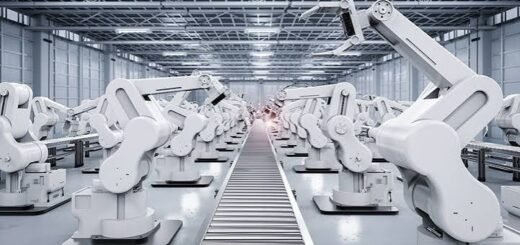
Manufacturing is one of the most established areas for robotics, and AI is making industrial robots more adaptable.
Factories already use robots for welding, painting, assembly, packaging, and inspection. AI can help these machines recognize differences between products and detect defects that may be difficult for traditional systems to identify.
AI-powered inspection robots, for example, can use cameras to examine products for cracks, scratches, incorrect components, or other quality issues. They can process large numbers of products quickly and consistently.
Collaborative robots, often called cobots, are another important development. These machines are designed to work alongside human employees rather than operate completely separately. A human worker may handle a complicated part of a process while the robot performs a repetitive or physically demanding task.
This combination can improve productivity while allowing people to focus on activities that require judgment, creativity, and communication.
AI Robotics in Healthcare
Healthcare is another field where intelligent robots could have a major impact. Robots can assist medical professionals, support rehabilitation, transport supplies, and perform certain highly precise procedures.
Surgical robotics is one example. Robotic systems can provide surgeons with precise instruments and enhanced control during complex procedures. AI technologies may also assist with image analysis and decision support.
Robots can also help patients recovering from injuries or neurological conditions. Rehabilitation robots can provide controlled movements and repeated exercises while monitoring a patient’s progress.
In hospitals, autonomous robots may transport medicine, equipment, meals, or laboratory samples. This can reduce the amount of time healthcare workers spend on routine transportation tasks and allow them to concentrate more on patient care.
AI Robotics in Agriculture
Agriculture faces challenges such as labor shortages, rising costs, unpredictable weather, and the need to produce more food efficiently. AI Robotics can help address some of these problems.
Agricultural robots can be used for tasks such as planting, monitoring crops, removing weeds, harvesting, and inspecting plants. With computer vision, a robot can distinguish between crops and unwanted plants.
AI can also analyze information collected by sensors and cameras to identify signs of plant stress or disease. Farmers can then make more informed decisions about irrigation, fertilizer, and crop management.
As agricultural robotics becomes more affordable and capable, smaller farms may also gain access to technologies that were previously available mainly to large agricultural operations.
AI Robotics in Warehouses and Logistics
The growth of online shopping has increased the demand for fast and efficient warehouses. AI-powered robots are helping companies manage inventory and move products around large facilities.
Warehouse robots can transport packages between storage areas and workers. Some systems can identify where products are located and determine efficient routes through a facility.
AI is particularly useful when warehouse conditions change frequently. Instead of following one rigid route, an intelligent robot can respond to obstacles and changing workloads.
This technology can reduce physical strain on workers and help businesses process orders more efficiently.
AI Robotics at Home
Robotics is not limited to industrial environments. Consumers are already familiar with robotic vacuum cleaners and lawn-mowing robots, but future household robots may perform much more complex tasks.
AI could allow home robots to recognize objects, understand simple conversations, learn household routines, and adapt to different environments.
For older adults or people who need assistance with everyday activities, intelligent robots could potentially provide support with reminders, mobility, household tasks, or communication.
However, home robotics also presents challenges. Robots operating in private spaces must handle sensitive information responsibly, especially when cameras, microphones, and internet connections are involved.
Benefits of AI Robotics
One of the biggest advantages of AI Robotics is improved efficiency. Robots can work for long periods and perform repetitive tasks consistently.
Safety is another major benefit. Robots can be used in environments that may be dangerous for humans, including areas with extreme temperatures, toxic substances, heavy machinery, or unstable structures.
AI Robotics can also improve accuracy. In tasks that require precise movements or detailed inspection, intelligent machines may reduce human error.
Another benefit is scalability. Once an effective robotic system has been developed, organizations can potentially deploy similar systems across multiple locations.
At the same time, the greatest value may come from human-robot collaboration. Instead of thinking only about robots replacing people, businesses can use intelligent machines to extend human capabilities.
Challenges and Concerns
Despite its potential, AI Robotics is not without challenges. Developing advanced robots can be expensive, particularly for small businesses. Hardware maintenance, software updates, training, and integration with existing systems can also add costs.
Safety is another important concern. Robots that operate around humans must be designed to respond appropriately to unexpected situations.
Privacy is especially relevant for robots equipped with cameras and microphones. Companies need to establish clear policies for collecting, storing, and using information.
There is also concern about employment. Some repetitive jobs may become increasingly automated. However, new roles may emerge in robot programming, maintenance, system design, data analysis, and AI management.
The transition will require education and workforce training so that people can adapt to changing job requirements.
The Future of AI Robotics
The future of AI Robotics is likely to involve robots that are more capable, flexible, and easier to interact with. Instead of requiring highly specialized programming for every task, future robots may be able to understand natural-language instructions and learn new tasks more easily.
Humanoid robots are receiving significant attention because their physical design could allow them to operate in environments built for humans. However, useful robotics will not necessarily look human. Different tasks require different designs, from small warehouse machines to surgical systems and agricultural robots.
Advances in AI models, sensors, batteries, computing hardware, and mechanical engineering will continue to shape the industry.
The most successful robotic systems will likely be those that solve real problems rather than simply demonstrate impressive technology. A robot that saves workers time, improves safety, reduces waste, or helps deliver better healthcare can provide meaningful value.
Frequently Asked Questions About AI Robotics
1. What is AI Robotics?
AI Robotics is the combination of artificial intelligence and robotic technology. It allows robots to use technologies such as machine learning, computer vision, sensors, and language processing to understand their environment and perform tasks with greater independence.
2. How is AI used in robots?
AI helps robots analyze information collected through cameras and sensors, recognize objects, understand commands, make decisions, and adapt to changing situations. Machine learning can also help robots improve their performance based on data and previous experiences.
3. What are some examples of AI Robotics?
Examples include autonomous warehouse robots, agricultural robots, robotic vacuum cleaners, surgical robots, inspection robots, delivery robots, and collaborative robots used in manufacturing environments.
4. Can AI robots replace human workers?
Some robots can automate repetitive or predictable jobs, but AI Robotics does not necessarily mean complete replacement of human workers. In many workplaces, robots are used alongside people to handle dangerous, repetitive, or physically demanding tasks while humans focus on decision-making and other complex activities.
5. What are the main benefits of AI Robotics?
The main benefits include increased efficiency, improved accuracy, greater workplace safety, reduced repetitive work, and the ability to operate in environments that may be difficult or dangerous for humans.
6. Is AI Robotics expensive?
Advanced robotic systems can be expensive because they require specialized hardware, software, sensors, maintenance, and skilled professionals. However, costs can vary significantly depending on the type and complexity of the robot.
7. What industries use AI Robotics?
AI Robotics is used across many industries, including manufacturing, healthcare, agriculture, logistics, retail, construction, transportation, and consumer technology. New applications continue to appear as robotic and AI technologies improve.
Conclusion
AI Robotics represents an important step in the evolution of intelligent machines. By combining the physical capabilities of robots with the learning and decision-making abilities of artificial intelligence, these systems can perform tasks that were once difficult or impossible for machines to handle independently.
From factories and hospitals to farms, warehouses, and homes, AI-powered robots are becoming increasingly useful. Although challenges involving cost, safety, privacy, and employment remain, continued innovation could make intelligent robotics a normal part of everyday life.
The future is unlikely to be simply about humans versus robots. Instead, it may be about humans and intelligent machines working together. When designed responsibly, AI Robotics can help people complete difficult tasks, improve productivity, increase safety, and create new opportunities across many areas of society.