Invisible Intelligence: How AI Is Transforming Everyday Devices
Introduction
Imagine waking up in the morning as your alarm adjusts to your daily routine, your smartwatch provides an overview of your sleep, and your coffee machine begins preparing your favorite drink. As you get ready for work, your smartphone organizes notifications, your wireless earbuds reduce background noise, and your home thermostat adjusts the temperature to keep your living space comfortable. None of these activities may feel particularly extraordinary anymore, yet they demonstrate how artificial intelligence is quietly becoming part of everyday life.
Artificial intelligence has moved far beyond research laboratories, advanced robots, and complicated computer systems. It is increasingly embedded in ordinary devices that people use without thinking much about the technology behind them. Smartphones, televisions, washing machines, security cameras, cars, headphones, and even kitchen appliances are becoming more intelligent through AI-powered features.
This transformation is different from the traditional image of artificial intelligence. Instead of interacting with a separate machine or opening a dedicated AI application, people increasingly experience intelligence through familiar products. A smartphone camera automatically improves a photograph, a navigation application predicts traffic delays, and a smart television recommends content based on viewing habits. In each case, AI works behind the scenes to make a device more responsive and useful.
The growing presence of this invisible intelligence is changing people’s expectations of technology. Devices are no longer expected merely to follow commands. Users increasingly expect them to recognize patterns, understand preferences, anticipate needs, and simplify routine activities.
However, this progress also raises important questions about privacy, security, reliability, and the growing collection of personal information. As AI becomes less visible, understanding how it works becomes more important.
This article explores how artificial intelligence is transforming everyday devices, the benefits it offers, the challenges it creates, and what the future of invisible intelligence may look like.
1. What Is Invisible Intelligence?
Invisible intelligence refers to artificial intelligence that operates within familiar devices and services without requiring users to interact with a separate AI system directly.
The technology may be working in the background while someone takes a photograph, listens to music, drives a car, or manages household appliances. Its purpose is often to improve the device’s performance, automate repetitive decisions, or personalize the user’s experience.
For example, when a smartphone recognizes a face in a photograph, AI may help identify and organize the image. When wireless headphones reduce surrounding noise, intelligent processing may help distinguish unwanted sounds from the audio the user wants to hear.
Similarly, a connected thermostat may analyze temperature readings and occupancy information to support more efficient heating and cooling.
Not every intelligent feature requires advanced AI. Some devices rely on conventional automation, predefined rules, or basic sensors. Others use machine learning, computer vision, speech recognition, or generative AI to perform more sophisticated tasks.
The defining characteristic of invisible intelligence is that the technology becomes part of the experience rather than the main attraction.
People generally do not want to understand every technical detail behind a useful feature. They want their devices to work smoothly, respond quickly, and solve practical problems.
When invisible intelligence works well, it can make technology feel simpler even as the systems behind it become more complex.
2. Smartphones Are Becoming More Intelligent
Smartphones are among the clearest examples of AI becoming an everyday technology. Most people use their phones for communication, navigation, entertainment, photography, shopping, and work. AI is improving many of these activities without necessarily changing how users operate their devices.
One important area is mobile photography. Modern smartphone cameras can use computational techniques to recognize scenes, improve exposure, reduce image noise, and combine information from multiple frames. These processes help produce clearer photographs in difficult lighting conditions.
AI can also support image editing, background removal, object recognition, and the organization of photographs. Some devices offer features that can remove unwanted objects or improve selected elements of an image.
Another area is communication. Smartphones may provide predictive text, automatic transcription, spam detection, translation, and tools for summarizing selected information. AI assistants can also help users draft messages, organize notes, or locate information.
Navigation applications use traffic information and predictive models to estimate travel times and recommend alternative routes. Although these systems also depend on conventional mapping and statistical methods, intelligent analysis can help them respond to changing conditions.
AI is also becoming more integrated into smartphone processors. Some tasks can be performed directly on the device, which may reduce delays and limit the need to send certain information to cloud services.
However, capabilities differ between phones, operating systems, and applications. AI-generated content can also contain errors, and users should review important information before relying on it.
As smartphones become more intelligent, their value will increasingly depend on how naturally their features fit into everyday routines.
3. Smartwatches Are Making Personal Technology More Proactive
Smartwatches and fitness trackers have transformed how people monitor activity and interact with notifications. AI is helping some of these devices move beyond collecting measurements toward presenting more useful interpretations of everyday patterns.
A smartwatch may track steps, estimate exercise intensity, monitor heart rate, or record sleep-related measurements. Compatible applications can use this information to provide summaries and identify trends over time.
For example, someone trying to become more active may receive reminders to move after long periods of inactivity. A fitness application may suggest achievable exercise goals based on previous activity.
These features can help people develop consistent habits without manually reviewing every measurement.
Wearables are also becoming useful tools for managing daily tasks. Users can check reminders, respond to selected notifications, control music, and access assistant features directly from their wrists.
In professional environments, specialized wearables can support hands-free communication and provide access to instructions while workers perform physical tasks.
However, it is important to understand the limitations of consumer health technology. Measurements may be inaccurate, and automated interpretations cannot replace professional medical evaluation. Users should also consider how health-related information is collected, stored, and shared.
The future of wearable intelligence will depend on providing helpful insights without overwhelming users with notifications or encouraging them to treat every measurement as a definitive assessment of their health.
4. Smart Home Appliances Are Learning to Work More Efficiently
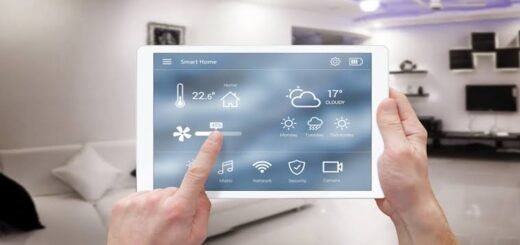
Household appliances are becoming more connected and, in some cases, more intelligent. Washing machines, refrigerators, ovens, air conditioners, and robotic cleaners increasingly offer features that simplify everyday chores.
A smart washing machine may recommend a suitable cycle based on selected settings or notify users when a load is finished. Some appliances can monitor operating conditions and provide information that helps owners identify potential maintenance needs.
Smart refrigerators may offer food inventory tools, shopping reminders, or recipe suggestions. Connected ovens can provide guided cooking instructions and allow users to monitor selected settings remotely.
AI can make these features more adaptive by analyzing sensor information, recognizing patterns, and supporting decisions based on the appliance’s operating conditions.
Robotic vacuum cleaners provide another useful example. Many models can map rooms, navigate around obstacles, and plan cleaning routes. Some use computer vision or other sensing technologies to recognize objects and avoid certain hazards.
These capabilities can reduce the amount of manual effort required to maintain a household.
Nevertheless, not every smart appliance needs AI to be useful. Simple timers, reliable sensors, and well-designed automatic programs can solve many everyday problems effectively.
Consumers should also consider purchase costs, software support, connectivity requirements, and whether the advertised features provide genuine value.
The goal of intelligent appliances should be to make household responsibilities easier, not to turn simple activities into complicated digital processes.
5. AI Is Changing the Way People Experience Entertainment
Entertainment devices are another area where invisible intelligence has become increasingly common.
Streaming platforms use recommendation systems to suggest films, television programs, and music based on viewing history, listening preferences, and other signals. These recommendations can help users discover content without searching through enormous libraries manually.
Smart televisions may also use AI-related processing to improve picture quality, upscale lower-resolution content, adjust sound, or optimize selected display settings.
Wireless headphones and earbuds can use intelligent audio processing to reduce background noise, improve voice clarity, and adapt sound according to the listening environment.
Gaming systems may use AI techniques to improve graphics, animate characters, adjust difficulty, or create more responsive virtual environments.
Meanwhile, content creators can use AI-powered cameras and editing tools to improve lighting, stabilize footage, remove unwanted noise, and speed up repetitive editing tasks.
These features are making high-quality entertainment and content creation more accessible to ordinary users.
However, recommendation systems can sometimes limit the variety of content people encounter by repeatedly suggesting similar material. Personalization may also be influenced by commercial priorities rather than users’ broader interests.
The challenge is to use AI to improve discovery without restricting choice. Users should remain able to explore unfamiliar content, adjust recommendations, and decide what they want to watch or hear.
Invisible intelligence is most useful in entertainment when it enhances the experience while leaving creative freedom and personal choice intact.
6. Cars Are Becoming Intelligent Everyday Companions
Modern vehicles increasingly rely on software, sensors, and AI-related technologies to improve convenience, navigation, safety, and driving assistance.
Navigation systems can analyze traffic conditions, estimate arrival times, and suggest alternative routes. Voice interfaces allow drivers to control selected functions without manually navigating menus.
Some vehicles use driver-assistance systems to help maintain distance from other vehicles, provide lane guidance, detect potential collisions, or monitor driver attention. These features rely on a combination of sensors, software, and, in many cases, machine learning.
AI can also support predictive maintenance by analyzing vehicle information and identifying patterns that may indicate a developing problem. The usefulness of such warnings depends on the vehicle’s sensors and diagnostic systems.
Inside the cabin, intelligent systems may adjust climate settings, recognize selected commands, or personalize certain preferences for different drivers.
Electric vehicles provide additional opportunities for intelligent energy management. Navigation systems may estimate energy consumption and help drivers plan charging stops based on distance, terrain, and other available information.
However, driver-assistance features have important limitations. They do not make every vehicle fully autonomous, and drivers must understand the capabilities and requirements of the systems installed in their cars.
Incorrect alerts, sensor limitations, and changing road conditions can affect performance.
As vehicles become more intelligent, manufacturers must prioritize safety, transparent communication, cybersecurity, and clear guidance about when drivers need to take control.
7. Smart Security Devices Are Watching More Carefully
Home security devices have evolved from basic motion detectors and recording cameras into connected systems that can analyze certain events and send more specific alerts.
AI-powered cameras may distinguish between people, animals, and vehicles, depending on their capabilities. This can reduce unnecessary notifications caused by ordinary movement, such as a passing car or an animal crossing the garden.
Smart doorbells allow residents to see visitors remotely, while connected locks can support temporary access codes and automated locking features.
Other devices monitor environmental conditions. Connected smoke detectors, water-leak sensors, and temperature monitors can alert homeowners when certain problems occur.
Some systems can coordinate several sensors to create more useful notifications. For example, a leak detector connected to a compatible water shutoff valve may help limit damage when a leak is identified.
These features make security technology more proactive, allowing homeowners to receive information about potential problems without constantly checking cameras or sensors.
However, AI-powered monitoring is not always accurate. Cameras may misclassify events, overlook activity, or generate false alarms. Facial recognition and other identification technologies can raise additional concerns about privacy and fairness.
Security devices also create potential entry points for cyberattacks if they are poorly configured or no longer receive updates.
Users should choose reputable products, secure their accounts, review recording policies, and keep software updated.
Intelligent security is valuable when it improves awareness and helps people respond appropriately without creating unnecessary surveillance or a false sense of protection.
8. AI Is Making Work Devices More Productive
Invisible intelligence is also changing the devices people use for professional activities.
Modern computers can include specialized processors designed to accelerate AI workloads. These capabilities may support background-noise reduction, automatic transcription, image enhancement, and selected AI applications that operate directly on the device.
Webcams can automatically adjust framing or lighting during video calls. Intelligent microphones can help separate speech from surrounding noise, making online meetings easier to follow.
AI-enabled software can assist with drafting emails, summarizing documents, organizing notes, and extracting information from lengthy reports.
In industrial environments, sensors and intelligent monitoring systems can help detect unusual equipment behavior. This may allow maintenance teams to investigate possible faults before they lead to costly downtime.
Warehouses can use intelligent scanners and connected devices to improve inventory tracking, while retail businesses can employ data-analysis tools to understand demand and manage stock.
The benefit is not simply faster computing. It is the ability to reduce repetitive work and make information easier to use.
However, AI-generated summaries may omit important details, transcription systems may misunderstand speech, and automated recommendations may rely on incomplete information.
Businesses should establish clear policies for confidential data, employee privacy, and the review of AI-generated work.
AI-powered devices are most effective when they support employees’ abilities and free them to concentrate on judgment, collaboration, and creative problem-solving.
9. Invisible Intelligence Is Improving Accessibility
One of the most valuable applications of AI is its ability to make everyday technology more accessible.
Speech recognition, text-to-speech tools, image descriptions, automatic captions, and translation features can help people interact with digital information in different ways.
For someone with a visual impairment, compatible software may read text aloud or describe selected visual content. For a person with hearing loss, automatic captions can make conversations and online videos easier to follow.
Voice-controlled devices can help people with limited mobility operate lights, adjust thermostats, or interact with compatible appliances without needing to reach physical controls.
AI translation tools can also help people communicate across language barriers, although the accuracy of translations varies with language, context, and subject matter.
These capabilities can improve access to education, employment, communication, and entertainment.
However, accessibility features must be reliable and flexible. Speech recognition may struggle with certain speech patterns, captions may contain errors, and automated descriptions may misunderstand visual information.
Designers should work with people who have different accessibility needs rather than assuming a single feature will serve everyone equally well.
Invisible intelligence can make technology more inclusive when it expands people’s choices and independence instead of forcing them to adapt to rigid interfaces.
10. On-Device AI: Intelligence Without Constant Cloud Connections
An important development in everyday technology is the growing ability to run AI models directly on compatible devices.
Traditionally, many AI services sent requests to remote servers, where powerful computers processed the information and returned a response. This approach remains important for many advanced applications, but it is not always necessary.
On-device AI allows certain tasks to be completed locally on smartphones, computers, cameras, and other compatible products.
For example, a phone may process selected image enhancements locally, while a computer may run a small language model to assist with specific tasks.
This approach can provide several advantages. Local processing may reduce response times, allow some functions to work without an internet connection, and limit the amount of information sent to external servers.
It can also improve resilience when connectivity is unreliable.
However, on-device AI has limitations. Smaller devices have constraints involving memory, battery life, processing power, and heat. More demanding tasks may still require cloud-based systems.
Privacy benefits also depend on the product’s design. A device may perform one function locally while sending other information to remote services.
Users should therefore avoid assuming that every feature described as AI-powered operates entirely on the device.
As processors become more efficient and models become better optimized, local intelligence may become more common, allowing everyday gadgets to respond more quickly while giving users greater control over certain types of data.
11. The Privacy Challenges Behind Invisible Intelligence
Although invisible intelligence can make devices easier to use, it can also make data collection less obvious.
A smart speaker may process voice commands, a wearable may collect activity measurements, and a security camera may record events around a property. Connected devices can generate detailed information about personal habits, locations, preferences, and daily routines.
When these systems operate continuously, users may not always realize how much information is being collected or how it is used.
Some information may be processed locally, while other data may be transmitted to cloud services or shared with third-party providers. The details vary between manufacturers and products.
There are also concerns about how long information is retained, who can access it, and whether it may be used for purposes beyond the feature that originally collected it.
To reduce these risks, consumers should review privacy settings, disable unnecessary collection features, use strong passwords, and understand the permissions requested by connected applications.
Devices should receive security updates throughout their supported lifetimes, and manufacturers should explain their data practices in clear language.
Businesses also need to protect information generated by intelligent workplace devices, particularly when it involves employees, customers, or confidential operations.
Privacy should not be treated as an optional extra. It is an essential part of building technology that people can trust.
12. Why Simplicity Still Matters
As devices become more intelligent, there is a risk that manufacturers may introduce AI features simply because the technology is available.
Not every household appliance needs a chatbot, and not every application needs to automate decisions. Sometimes, a physical button, a clear menu, or a simple programmable timer provides a better experience than an elaborate AI system.
Complexity can introduce new problems. AI features may require additional processing power, consume battery life, depend on internet connectivity, or produce unpredictable results.
Some products also advertise capabilities that sound impressive but offer limited practical value. Consumers may end up paying more for features they rarely use.
Good product design starts with understanding people’s needs. AI should improve a device’s core function rather than distract from it.
For example, intelligent noise cancellation can provide a clear benefit in headphones because it improves listening conditions. A predictive maintenance alert may be valuable in an appliance because it helps owners identify a potential problem.
By contrast, an unnecessary automated feature may create more notifications and decisions than it eliminates.
The most successful intelligent devices will combine advanced technology with simple interfaces, dependable performance, and clear user controls.
In the end, people are more likely to appreciate invisible intelligence when it makes life easier without demanding constant attention.
13. The Future of Invisible Intelligence
The next generation of everyday devices is likely to become more connected, personalized, and capable of coordinating activities across different products.
Smartphones, wearables, home appliances, and computers may increasingly share information through compatible systems, allowing users to manage routines with fewer separate commands.
AI assistants could help coordinate schedules, summarize information, and manage selected tasks across applications. With appropriate permissions, they may also interact with connected devices to carry out specific actions.
For example, a user might request a quiet environment for an online meeting. A compatible system could suggest or activate noise reduction, adjust lighting, and silence selected notifications.
In a smart home, an intelligent energy-management system might coordinate compatible appliances with heating equipment, solar panels, or battery storage.
Wearables may provide more personalized activity summaries, while on-device AI could support additional functions without requiring constant cloud access.
However, future systems will need to work reliably across different manufacturers and platforms. Interoperability, privacy, security, affordability, and long-term software support will strongly influence adoption.
There will also be a growing need for transparency. Users should understand when AI is making decisions, what information it uses, and how to override unwanted behavior.
The goal should not be to make technology invisible in every situation. When an AI system makes an important decision or performs a consequential action, people should be able to understand and control what is happening.
The best future devices will combine quiet assistance with clear accountability.
Conclusion
Invisible intelligence is transforming everyday devices by bringing artificial intelligence into the products people already use. Smartphones are improving photography and communication, wearables are organizing personal measurements, smart appliances are simplifying household chores, and vehicles are using intelligent systems to support navigation and driving assistance.
Entertainment devices are becoming more personalized, security systems are providing more specific alerts, and workplace tools are helping people manage information more efficiently. Accessibility features are also creating new opportunities for people to interact with technology according to their individual needs.
Much of this progress happens in the background. People may notice the convenience of a feature without thinking about the AI, sensors, or software that make it possible.
Yet the growing presence of invisible intelligence makes responsible design more important than ever. Privacy, cybersecurity, accuracy, accessibility, and user control must remain central to the development of connected devices.
Consumers should choose products that solve real problems, understand their data practices, and maintain appropriate security settings. Manufacturers should build reliable systems, provide clear explanations, and avoid adding unnecessary complexity.
Ultimately, the success of AI will not be measured only by how powerful models become or how many devices contain intelligent features. It will also depend on how naturally and responsibly these technologies improve everyday experiences.
The future of smart technology may not always involve machines that demand our attention. Increasingly, it may involve devices that quietly help us accomplish more, make better use of our time, and navigate daily life with greater convenience. When invisible intelligence is designed around human needs, the most impressive technology may be the kind that makes life simpler without making itself the center of attention.